Storm chasing kills more chasers on the road than any tornado ever has, so you can’t treat traffic risks as secondary concerns. Wet roads, hail accumulation, and flash flooding can end a chase team’s life long before a storm makes contact. Lightning strikes and hydroplaning claim lives with little warning. You must prioritize safety protocols, escape routes, and road awareness above all else. Keep going to understand exactly what kills chasers and how to prevent it.
Key Takeaways
- Traffic crashes and lightning are the leading causes of storm chaser fatalities, making safety protocols essential during active coverage.
- Reckless chasing endangers not only the team but also emergency responders, residents, and law enforcement nearby.
- Fatigue and road hazards like hail and flooding impair judgment, increasing the likelihood of preventable fatal accidents.
- Confirming escape routes before approaching storm cores prevents life-threatening entrapment during rapidly changing conditions.
- Responsible safety practices preserve long-term storm chasing operations and maintain trust within affected communities.
Storm Chasing Kills More Chasers on the Road Than in Any Tornado
Although tornadoes grab the headlines, the road kills more storm chasers than any vortex does. For nearly sixty years, every known chaser death was driving-related. Today, indirect deaths — many tied to hydroplaning after a chase — still outnumber direct storm fatalities.
Storm fatigue compounds the danger: exhausted drivers make slower decisions on hail-covered or flooded roads, where conditions deteriorate faster than most people expect.
You can’t afford to treat vehicle travel as routine during coverage. Equipment safety matters here too — unsecured gear shifts your focus at the worst moment. Nearly half of all indirect chaser deaths connect back to preventable road errors.
Recognize that your greatest threat isn’t the funnel cloud you’re filming; it’s the road you’re driving to reach it.
Why Traffic Crashes and Lightning Are the Deadliest Storm Chasing Threats
Road hazards set the stage, but two specific threats—traffic crashes and lightning—account for the deadliest outcomes storm chasers face.
Road hazards lurk everywhere, but traffic crashes and lightning claim the most storm chaser lives.
Storm fatigue dulls your reaction time, and wet or hail-covered roads punish every lapse in judgment. Nearly half of known indirect chaser deaths linked directly to hydroplaning after a chase ended. You don’t have to be near a tornado to die.
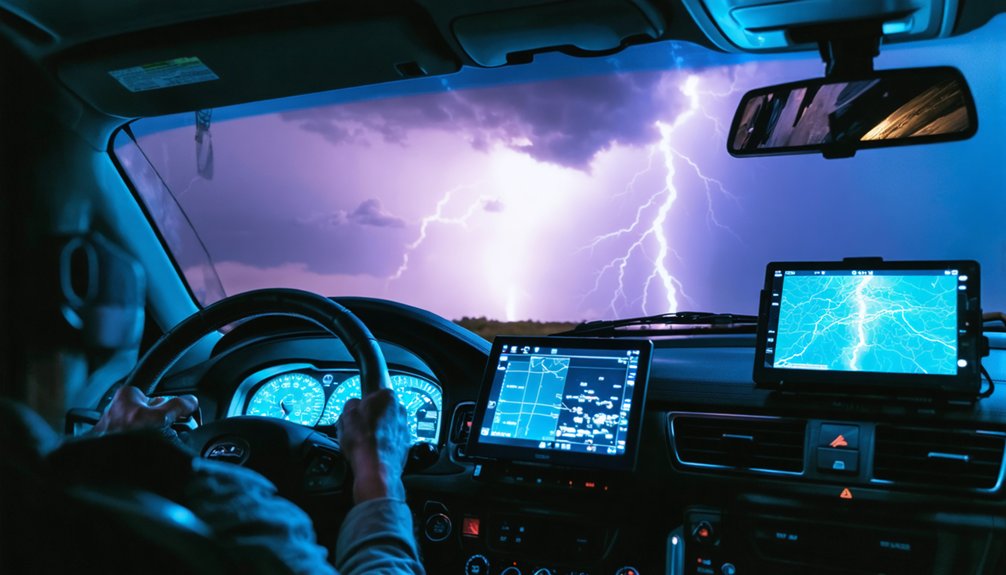
Lightning compounds that risk. When cloud-to-ground strikes occur within one mile, you need shelter immediately. Weather complacency kills here—strikes can arrive before storm features look threatening.
Stay inside a closed vehicle, avoid fences, power lines, and tall objects, and never assume distance protects you.
Respecting both threats keeps you operational. Ignoring either one converts coverage into an unnecessary gamble with your life.
What Hail, Rain, and Flooding Do to Storm Chasing Roads Without Warning
Hail, rain, and flooding can convert a passable storm-chasing route into a death trap within minutes. Hail accumulates fast, turning asphalt into an uncontrollable surface that strips traction without warning. Rain layers over that hail, and you’re suddenly hydroplaning toward a ditch or oncoming traffic.
Hail fog forms immediately after heavy hailfall, cutting visibility to near zero precisely when you need clear sightlines to navigate or escape. Flood hazards escalate just as quickly—water rises faster than most drivers expect, and a road that looked crossable moments ago can sweep your vehicle off course.
You must continuously reassess road conditions rather than trusting your last observation. Never drive into rising water, and keep your escape routes confirmed before conditions force a decision you can’t reverse.
How Escape Routes Keep Storm Chasers Alive When Conditions Turn Fast
When road conditions collapse that fast, your only reliable safety margin is a planned exit you’ve already confirmed. Weather forecasting gives you advance data, but it can’t replace a pre-driven route you control.
Follow these four escape-route priorities:
- Identify two exits before approaching any storm core—never rely on a single road.
- Monitor storm motion continuously so shifting wind and rain don’t cut off your planned path.
- Establish communication protocols with your team so route changes reach everyone immediately.
- Abandon the shot the moment one exit closes—no footage justifies a no-exit scenario.
Task saturation kills situational awareness. Keep someone dedicated solely to navigation, and treat every route update as a critical decision, not a secondary concern.
Why Reckless Storm Chasing Creates Danger Beyond the Chase Team
Reckless storm chasing doesn’t just endanger your team—it pulls emergency responders, local residents, and law enforcement into unnecessary risk. When you ignore escape routes, skip equipment safety checks, or break down team communication, the consequences ripple outward fast.
Responders already managing evacuations shouldn’t have to redirect resources to extract a trapped chase vehicle. Trespassing delays your exit and obstructs active emergency operations. Entering damage areas exposes you to debris while blocking crews doing critical work.
You also influence other chasers. Normalized reckless behavior raises the acceptable risk threshold across the broader community. Protecting your freedom to chase long-term means operating with discipline now.
Responsible coverage—grounded in solid team communication and verified equipment safety—keeps your team out of situations that burden everyone else managing the storm.
Frequently Asked Questions
What Gear Do Storm Chasers Use to Stay Safe During Coverage?
You’ll rely on Protective Clothing and Safety Equipment to stay safe during coverage. Wear sturdy gear, keep a helmet ready, maintain communication devices, and guarantee your vehicle’s equipped to handle lightning, hail, and rapidly deteriorating road conditions.
How Do Storm Chasers Communicate With Emergency Responders During Active Events?
You’ll use established communication protocols to relay real-time weather prediction data to emergency responders via ham radio or spotting networks. Stay concise, avoid congesting emergency channels, and always prioritize clear, accurate reporting over dramatic coverage.
What Training Qualifications Should a Storm Chaser Have Before Pursuing Severe Weather?
Before you chase, you’ll need strong weather forecasting skills and sharp risk assessment judgment. Master meteorology basics, study storm behavior, complete spotter training, and practice safe driving under severe conditions to protect yourself effectively.
How Does Chase Team Size Affect Overall Safety During Storm Coverage?
A larger team improves your safety by splitting team coordination and risk assessment duties. You shouldn’t chase alone—your partner handles navigation while you drive, keeping both tasks sharp and your escape options open.
What Psychological Factors Cause Storm Chasers to Underestimate Danger During Chases?
Coincidentally, when adrenaline influence peaks, your risk perception drops sharply. You’re convinced you’ve “seen worse,” so you push closer. That false confidence—amplified by excitement—makes you underestimate road hazards, lightning proximity, and rapidly closing escape routes.
References
- https://www.atms.unca.edu/cgodfrey/courses/swfex/pdf/ChasingSafety.pdf
- https://www.youtube.com/watch?v=nxPSFg2R8YY
- https://en.wikipedia.org/wiki/Storm_chasing
- https://www.stormchasingusa.com/storm-chasing-and-safety/
- https://midweststormchasers.org/safety-tips/
- http://www.stormeyes.org/tornado/chasing/FAQ/
- https://www.reddit.com/r/stormchasing/comments/k89wnc/safety_tips_for_storm_chasing/
- https://www.livingskytours.com/storm-chasing-101/